


Introduction: A COP in a Context of Critical moment for multilateral systems
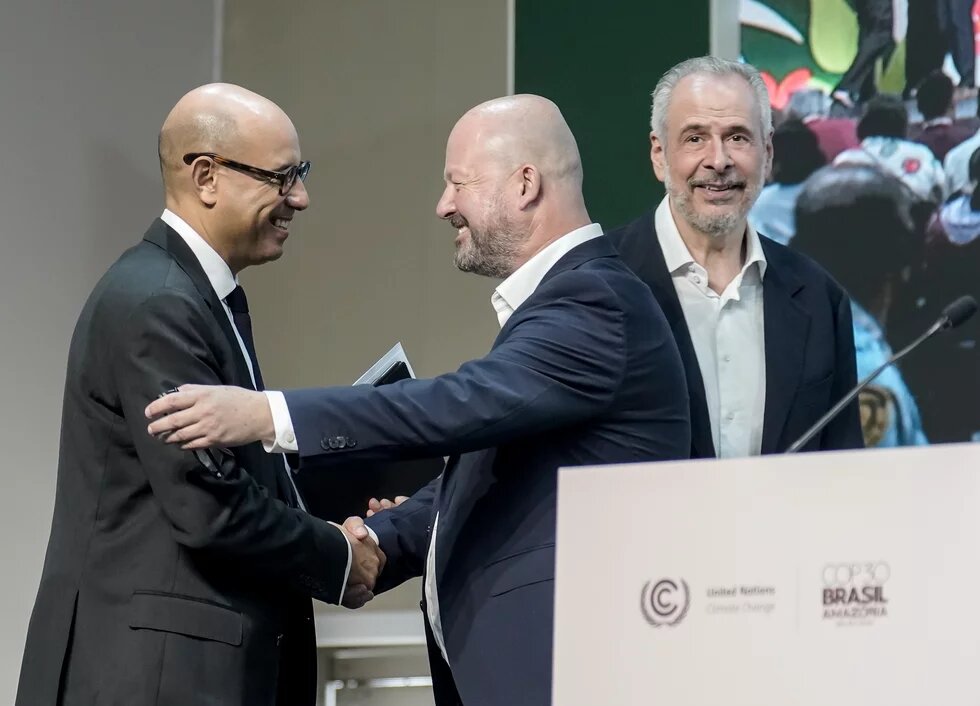
The 30th Conference of the Parties (COP30) took place in Belém, Brazil, in November 2025 in a context of multiple disruptions that profoundly shaped both its proceedings and its outcomes. From a scientific perspective, the year 2025 saw an alarming increase in global temperatures, which exceeded pre-industrial levels by 1.42°C, making it one of the hottest years ever recorded, according to the World Meteorological Organisation (WMO) [1]. Politically, this COP took place at a pivotal moment: exactly ten years after the Paris Agreement and thirty-three years after the 3rd Earth Summit held in Rio de Janeiro in 1992, of which Brazil was the historic host. The decade 2015–2025, intended to be a decade of climate action, has instead become the period during which global temperatures rose the most, starkly exposing the gap between political commitments and scientific reality; this COP also coincides with the third cycle of nationally determined contributions (NDCs), a strategic milestone that underscores the critical importance of this timing for strengthening ambition and ensuring the effective implementation of the objectives of the Paris Agreement.
The geopolitical context was particularly challenging: the war in Ukraine persisted, hampering cooperation with Russia and disrupting global energy markets; the war in Gaza reignited broader geopolitical tensions; and, above all, the effective withdrawal of the United States from multilateral climate action following the re-election of Donald Trump in January 2025 - marking a second withdrawal after the 2017- 2021 period - deprived the process of a major financial and political actor. The international community, civil society, and the media approached COP30 with a mixture of hope and apprehension against this backdrop of intersecting crises. This conference held special symbolic value for many because it was the first COP to be held in a non-authoritarian setting, following three consecutive climate summits hosted by countries with authoritarian regimes that severely restricted civic space. Belém was supposed to represent a return to the roots of environmental diplomacy and a reaffirmation of the voices of local communities and Indigenous peoples, as a gateway to the Amazon, symbolizing a renewed focus on territorially grounded climate action and historical responsibility; yet, in practice, this intention coexisted with strong institutional and private sector influences, as well as the political priorities of the Presidency, which significantly shaped the agenda and framed the limits of participation and ambition.
-
A Process Under Strain: Logistics, Political Messaging, and Mobilisation Dynamics
1.1 The Choice of Belém: Amazonian Symbolism and Operational Challenges
The decision to choose Belém as the host city was highly symbolic. Located at the heart of the Amazon, Brazil intended to place the protection of critical ecosystems and the rights of their guardians at the center of the negotiations. The Brazilian presidency, led by former climate negotiator André Corrêa do Lago, articulated a high level of ambition, framing COP30 as the “COP of Implementation and Truth” and pledging to turn the promises of Paris into concrete action [2].
However, this symbolism was quickly confronted with harsh logistical and political realities. Hosting a global conference of this scale in an Amazonian city presented several challenges, including stifling heat and humidity, intense tropical rainfall and inadequate conference infrastructure. Negotiation rooms, often overcrowded and noisy, frequently forced delegates to rely on headsets to follow the discussions. During the first week, a security breach linked to a protest inside the venue exposed vulnerabilities in access control and disrupted proceedings. A notable incident occurred just one day before the closing, when a fire broke out in the Blue Zone, raising concerns about safety and the readiness of the facilities [3]. These logistical difficulties became a tangible metaphor for the practical challenges of implementing climate action. And not only on site, but also in international reporting, these logistical challenges too often became the focus of attention instead of the climate negotiations themselves.
1.2 Media Slogans and Exacerbated Expectations
The Brazilian presidency skillfully communicated around strong and mobilising slogans, such as the Global Mutirão “ Portuguese term evoking collective community action” - COP of Truth, COP of Implementation, COP of Adaptation,…. Widely disseminated by the media, these slogans piqued observers' interest and generated considerable expectations for actionable outcomes. Yet, this ambitious rhetoric stood in contrast with domestic actions: just months before the COP, Lula’s government conducted a large auction of oil blocks, including 47 offshore at the mouth of the Amazon [4]. This duality cast a shadow over the presidency’s credibility and highlighted the internal tensions faced even by countries positioning themselves as climate champions.
1.3 A Historic Citizen Mobilization and Protests within the COP
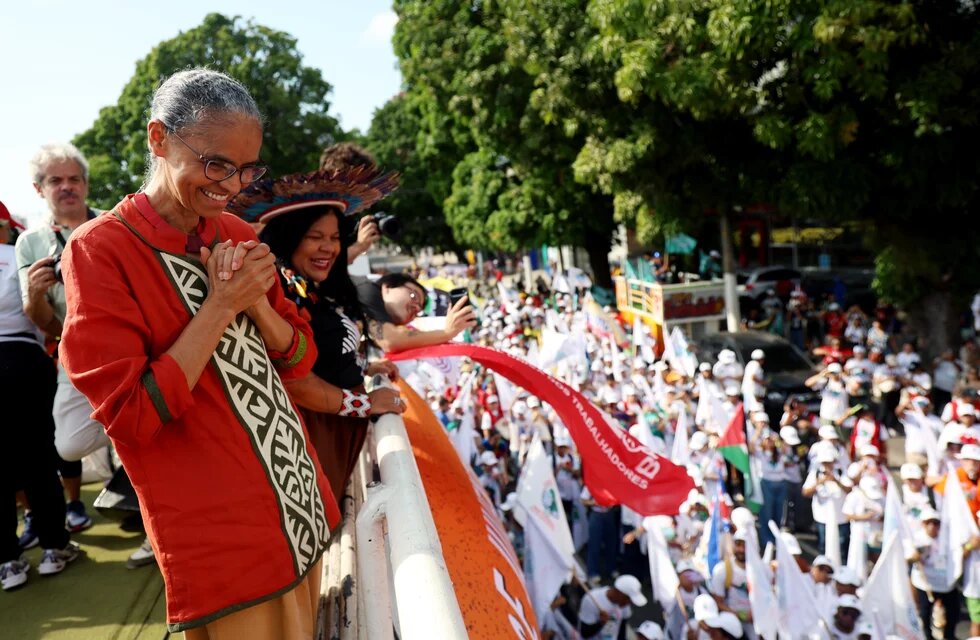
Faced with the slow pace of official negotiations at COP30 in Belém, Brazil, civil society actors, Indigenous representatives, and grassroots movements—many of whom were formally represented and active within the negotiation spaces—also organized a major parallel mobilization. While their presence inside the negotiation rooms reflects growing recognition, their political influence remains structurally constrained and limited compared to that of state actors. On 15 November 2025, a Global Climate March, held as part of the People’s Summit alongside the official talks, brought around 70,000 people into the streets to reinforce demands for climate justice, amplify voices that remain politically marginalized despite their representation, and exert additional pressure on world leaders to act with greater ambition [5].
This demonstration surpassed many of the COP's official decisions in terms of both scale and visibility. It showcased the power of a global citizens' movement demanding action in line with scientific evidence. The mobilization by Indigenous peoples was particularly striking. Around 2,500 Indigenous delegates made the journey to Belém, although many faced restrictions in accessing the official Blue Zone [6]. Their influence was tangible: in the midst of the conference, under the pressure of ongoing protests, the Brazilian government announced the demarcation of 14 new Indigenous territories [7]. Their messages were clear and direct. As one Indigenous leader present in Belém summarized [8]:
“We can’t eat money,….,We want our lands free from agribusiness, oil exploration, illegal miners and illegal loggers.”
In an unprecedented move, protests even penetrated the official COP space (Blue Zone). Activists breached checkpoints to access negotiation areas, occasionally clashing with security [9]. These actions symbolized the growing frustration with a process seen as too slow and disconnected from the urgent realities on the ground.
- Official Outcomes: A “Belém Package” with Mixed Ambitions
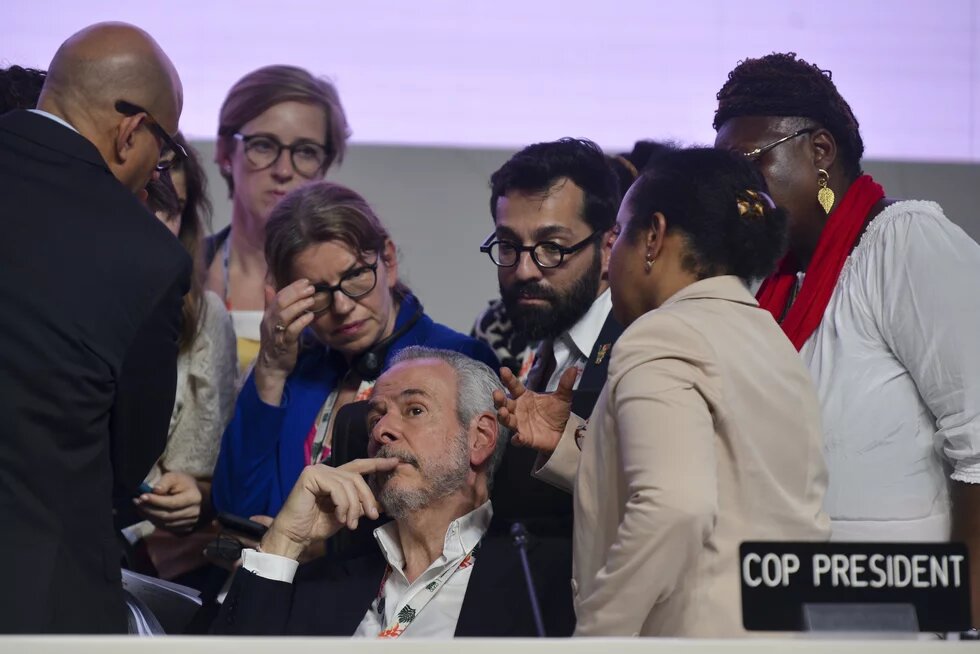
At the end of two weeks of extended negotiations, the 195 Parties adopted the “Belém Package,” a set of 29 decisions covering issues such as Just Transition, adaptation finance, trade, gender, and technology. Overall, however, this COP failed to meet the objectives of the Paris Agreement, despite being framed as the COP of implementation.
2.1 Structural Failures: The Omission of Fossil Fuels and the Ambition GAP
The most significant setback was the complete removal of any reference to a global roadmap for phasing out “fossil fuels” from the final COP30 outcome text. An initial proposal, supported by more than 80 countries, aimed at establishing a formal roadmap to implement the “transition away from fossil fuels” agreed at COP28, but negotiators ultimately failed to include this in the adopted decision after strong opposition from a coalition of major fossil-fuel producing and consuming countries, including Saudi Arabia, Russia, and India, among others [10]. The final text reaffirms general commitments to reduce emissions and to transition toward low-emission development, but it contains no binding calendar or concrete plan to phase out fossil fuels, a point of deep disappointment for many Parties and observers given the scientific urgency highlighted in successive IPCC reports [11].
The ambition gap for 2035 remains stark. While Parties were expected to submit updated Nationally Determined Contributions (NDC3.0) aligned with limiting global warming to 1.5 °C, only 119 countries had submitted their new 2035 targets by the conference, and collective ambition still falls far short of what science indicates is required, leaving the world on track for a temperature increase well above the Paris Agreement goal [12]. The newly launched mechanisms, such as the Belém Mission to 1.5 °C and the Global Implementation Accelerator, are voluntary technical cooperation platforms designed to support implementation and ambition-raising, but they do not compel states to raise their targets or include enforceable requirements to close the ambition gap [13].
2.2 Notable Advances: Social Justice and Monitoring Framework
In the face of these setbacks, several advances have emerged, mainly in the areas of social affairs and governance.
The recognition of social justice. The creation of the Belém Just Transition Mechanism is being celebrated as a historic victory by trade unions and civil society. This is the first time that a UNFCCC decision text has explicitly linked the climate transition to the protection of workers’ rights, the rights of Indigenous Peoples, and the promotion of gender equality [13]. Although its operationalization and financing still need to be clarified, this constitutes a crucial institutional milestone.
A framework for measuring adaptation. The adoption of a set of 59 indicators to track progress towards the Global Goal on Adaptation (GGA) closes a significant gap. These indicators provide the first common basis for assessing resilience in sectors such as water, agriculture, health and ecosystems [15]. However, the decision explicitly states that they are “voluntary, non-prescriptive and non-punitive”, which limits their binding force.
Parallel initiatives: the Tropical Forests Forever Facility (TFFF). On the sidelines of the formal negotiations, the launch of the TFFF, with announced pledges amounting to USD 6.6 billion, represents one of the most tangible initiatives of the conference. Its innovative mechanism stipulates that at least 20 % of the funds are to be directed to Indigenous Peoples and local communities [16]. Nevertheless, it remains a voluntary instrument that does not address the structural economic drivers of deforestation.
2.3 Finance: Promises without Accountability
The North-South financial gap remains unaddressed. While a new quantified collective goal (NCQG) of at least $300 billion per year by 2035 was agreed upon, no new binding public commitments were announced [17]. The call to triple adaptation financing was postponed to 2035, rather than 2030 as demanded by vulnerable countries. This further deepens the persistent trust deficit and undermines cooperation.
-
Analysis and Implications for Climate Diplomacy
3.1 Overall Assessment: Slogan Unfulfilled
The strong (media) slogans of the Brazilian presidency, such as “COP of Truth, COP of Adaptation,..”, were not reflected in the final text. Key decisions, such as those relating to the Just Transition and adaptation indicators, fall short of the goals set out in the Paris Agreement and remain far from scientific realities. The inclusion of the social dimension is definitely a success, but it does not meet the expectations of Indigenous peoples, who primarily demand the protection of their territories, not just financial support.
3.2 The Fragmentation of Climate Governance: The Risk of a Financial “Layer Cake”
A major issue emerging from Belém is the proliferation of parallel initiatives and funds. The near-annual creation of new funds or mechanisms, such as the Loss and Damage Fund at COP27 and the TFFF at COP30, while addressing real needs, significantly complicates the climate finance architecture. It creates a bureaucratic “layer cake” that increases entry points, disperses efforts, and makes overall tracking extremely challenging for developing countries with limited capacities. This raises a fundamental question: does this multiplication of initiatives outside the main text signal agile and pragmatic multilateralism, or rather its inability to produce inclusive and binding agreements?
3.3 Prospects for COP 31: what role of the Australian Presidency?
COP31, scheduled to take place in Antalya (Turkey) under an unprecedented Australian presidency (with Turkey as the host country but Australia presiding over the negotiations), inherits a huge mandate [18]. Will the next COP be able to meet the challenge of making the Belém mechanisms work and providing adequate funding for them? The approach will need to be more realistic: prioritizing implementation over the creation of new mechanisms, and restoring trust through predictable financial flows and immediate action on fossil fuels.
Conclusion: The Decade of Truth
Ten years after Paris, COP30 in Belém confirmed that climate multilateralism is facing a crisis of credibility and effectiveness. While it preserved the framework for dialogue, it failed to deliver the transformative changes that are urgently needed. The overall outcome is mixed: significant social advances, but no progress on the root causes of the crisis.
The most lasting impact of Belém may be the growing recognition of parallel climate action. When COP decisions are perceived as less ambitious than the initiatives led by non-state actors and social movements, the authority of the UN climate process is tested. The coming years will therefore be decisive: COPs must evolve to better align their outcomes with scientific evidence and the needs of communities, or risk seeing their role gradually diluted within a more fragmented landscape of climate governance.
Against this backdrop, the upcoming COPs:COP31 in Turkey, COP32 in Ethiopia, and COP33 in India - offer a renewed opportunity. Hosted by countries from the Global South, these conferences can help re-centre the UNFCCC on implementation, solidarity, and equity. If they succeed in delivering practical and inclusive decisions, they may yet reaffirm the Paris Agreement as a living framework capable of driving real change, and restore confidence in multilateral climate cooperation.
References:
[1] World Meteorological Organization (WMO). (2025). State of the Climate: Update for COP30.
[2] COP 30. (2025, Nov. 10). COP 30 President Ambassador André Corrêa do Lago’s Speech (Transcription).
[3] COP 30. (2025, Nov. 20). Report from the COP30 organising committee-11/20.2025.
[4] Fossil Fuel Non-Proliferation Treaty Initiative. (2025, June.12). On the Eve of COP30, Brazil's Oil and Gas Auction Could Outpace Last Six Years of Agribusiness Sector Carbon Emissions.
[5] Peoples Dispatch. (2025, Nov. 16). 30,000 people march in Belém for Climate Justice.
[6] Carbon Brief. (2025, Nov. 23). COP30: Key outcomes agreed at the UN climate talks in Belém.
[7] International Center for Transitional Justice (ICTJ). (2025, Nov. 18). Brazil Creates New Indigenous Territories During Protest-Hit COP30.
[8] Aljazeera (2025, Nove.12). Our land is not for sale: Indigenous people protest at COP 30 in Brazil
[9] Reuters. (2025, Nov. 12). Protests force their way into COP 30 summit venue, clash with security
[10] UN Geneva (2025, Nov 22). Belem COP 30 delivers climate finance boost and a pledge to plan fossil fuel transition.
[11] FairPlanet (2025, December 15). A ‘COP of Truth’: Key Takeaways from this Year’s Climate Summit.
[12] ClimateTracker (2025, December 19). CAT 2035 Climate Target Update Tracker.
[13] COP 30 (2025, November 22). COP 30 approves Belém Package
[14] UNFCCC (2025, November 21) United Arab Emirates Just Transition work programme.
[15] UNFCCC (2025, November 21) Global Goal on adaptation.
[16] COP 30 ( 2025, November 6). Over USD 5.5 billion Announced for Tropical Forest Forever Facility as 53 Countries Endorse the Historic TFFF Launch Declaration.
[17] WRI (2025, November 25). Beyond the Headlines: COP 30’s Outcomes and Disappointments.
[18] Australian Department of Foreign Affairs and Trade. (2025, Nov. 22). COP to be hosted by Türkiye with Australia leading negotiations.